How has your career unfolded and how did participating in 21CL help prepare you for your next steps going to college, taking on a new leadership role in community/college and after?
 My journey started with a deep “love of humanity” and a childhood passion for medicine. 21CL was the ultimate training ground that helped me turn that passion into a professional plan. The Summer Youth Leadership Institute (SYLI) and the Healthcare/IT Institute (HII) completely opened my eyes, making me realize that both the business and medical world could be a powerful place for me to thrive. This foundation was completely game-changing. We dove deep into business and medical setting simulations, mastering practical skills like differentiating real credentials from “fluff” on a resume, learning to nail mock interviews, and truly grasping what it takes to step up as a professional individual.
21CL’s impact was immediate, acting as the impetus for me applying to high school programs like the Fulton County Youth Commission (FCYC), where I served as an appointed commissioner for two years, and the Model Atlanta Regional Commission (MARC), where I was selected as a Next Generation Leader tackling community planning. This early training was a launchpad that I highly recommend for anyone considering joining this organization. By staying involved and leveraging my participation, 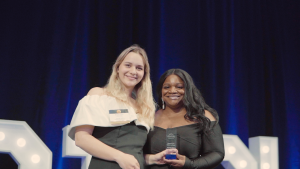 I was recognized with the 21st Century Leaders’ Georgia Youth Leadership Award (GYLA) in 2024. Entering my college career, I immediately put my dedication to inclusivity into action: I dedicated over 100 hours advocating for students with disabilities in the Accessibility Education Office. Furthermore, I applied 21CL’s lessons to my continuous work at the YMCA, progressing from a counselor to Program Director and earning the YMCA Legacy Leaders Scholarship in 2025. Thanks to 21CL’s independent study modules and exposure to big corporation leaders, I built a solid “toolkit of skills” that made me a better citizen, a trusted leader, and ready to succeed in life.
What’s your memorable or ‘aha’ moment during your time at 21CL?
My biggest “aha” moment came after attending the HealthCare & IT Institute (HII) hosted by Wellstar. The program gave me amazing connections to industry leaders, but the real thrill was that my essay was selected and published as the winner of Piedmont Hospital’s DaVinci Surgical Robot Naming Contest. Knowing that a child will be able to live because of a surgery done by a robot I named excites me to a level unimaginable. That moment cemented my commitment to becoming a medical doctor. I am actively exploring possibilities in both OB GYN practices and Pediatric Surgery so I can take an active role in protecting and healing those most vulnerable, including children and women. It proved that even small successes can have a massive impact, and that future medical technology is a field I need to be ready for!
Did 21CL assist you in developing a leadership style that makes you an effective leader? If so, how?
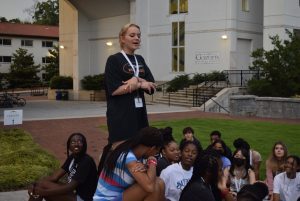 Absolutely! 21CL helped me identify and fulfill essential leadership traits like being Forward-Thinking, Resourceful, Passionate, and Service-Oriented. More than just theory, it delivered high-impact career-building exposure by connecting me with top Atlanta corporations and industry professionals through institutes like SYLI and HII, and directly leading to opportunities like my tech internship with the Georgia TagED Collaborative Fellowship. Most importantly, 21CL taught me how to effectively Leverage Diversity. My core platform is promoting Inclusivity, and I believe it’s the key to solving major societal issues today. This mission is exactly why I’m driven to medicine; I strive to provide care and advance health equity for vulnerable and marginalized populations. 21CL gave me the confidence to promote and educate my peers on recognizing human rights and enabling intersectionality for everyone. Being an effective leader, to me, means driving positive change, and 21CL gave me the training to lead groups with the respect and empathy that makes teamwork truly thrive.
Why do you believe programs like 21CL are important? And what advice would you give to a current or future student?
Programs like 21CL are vital because they actively build a more inclusive and equitable world. The 21CL organization is the key that unlocks fundamental, exclusive career-building opportunities, providing access to top Atlanta companies like Coca-Cola, Cox Enterprises, Wellstar, and Georgia Power through corporate tours and round tables with executives—access high school students would have no way of securing on their own. They are instrumental in promoting empowered youth who can recognize each other’s diversity, talents, and potential to make a real difference in our community.
My advice for current or future students is this: You have to step up and put people above all else. Don’t just rely on classroom learning; you need real-life experience. Use 21CL to get those connections to business leaders and hands-on community stewardship practices. This organization provides the platform to apply your leadership skills immediately, like working with the Fulton County Youth Commission or progressing into a YMCA Program Director role. Moreover, becoming a leader of yourself means aggressively seeking opportunities to broaden your clinical and global perspective to understand the entire world. For example, my recent travel to Ecuador and the Galapagos Islands involved self-study of ecological biology, culture, and third-world exposure, expanding my global viewpoint. I also sought specialized clinical exposure by shadowing at the Georgia Center for Autism and Developmental Pediatrics (GCADP), gaining deep insight into behavioral therapy. There, I observed evidence-based techniques and learned the critical role of a physician as a “translator” and “coach” for children with complex diagnoses like Autism and ADHD, which is vital for effective leadership both in medicine and in leading others. Now is the time to develop your voice and leadership skills so that we can truly see “intersectionality at its best” in every community across the USA.